Isolate the Problem by Listening
If you hear ringing when you clap your hands, in-room absorption is lacking. If traffic, installations or neighbors' conversations pass through the wall, the insulation of the building elements should be examined separately.
First Reflections Around the Microphone
It may not be enough to use the panel only as a decoration behind the camera. The position of the table, microphone direction, opposite wall and ceiling are evaluated together. The required footprint varies depending on room dimensions.
Product Selection
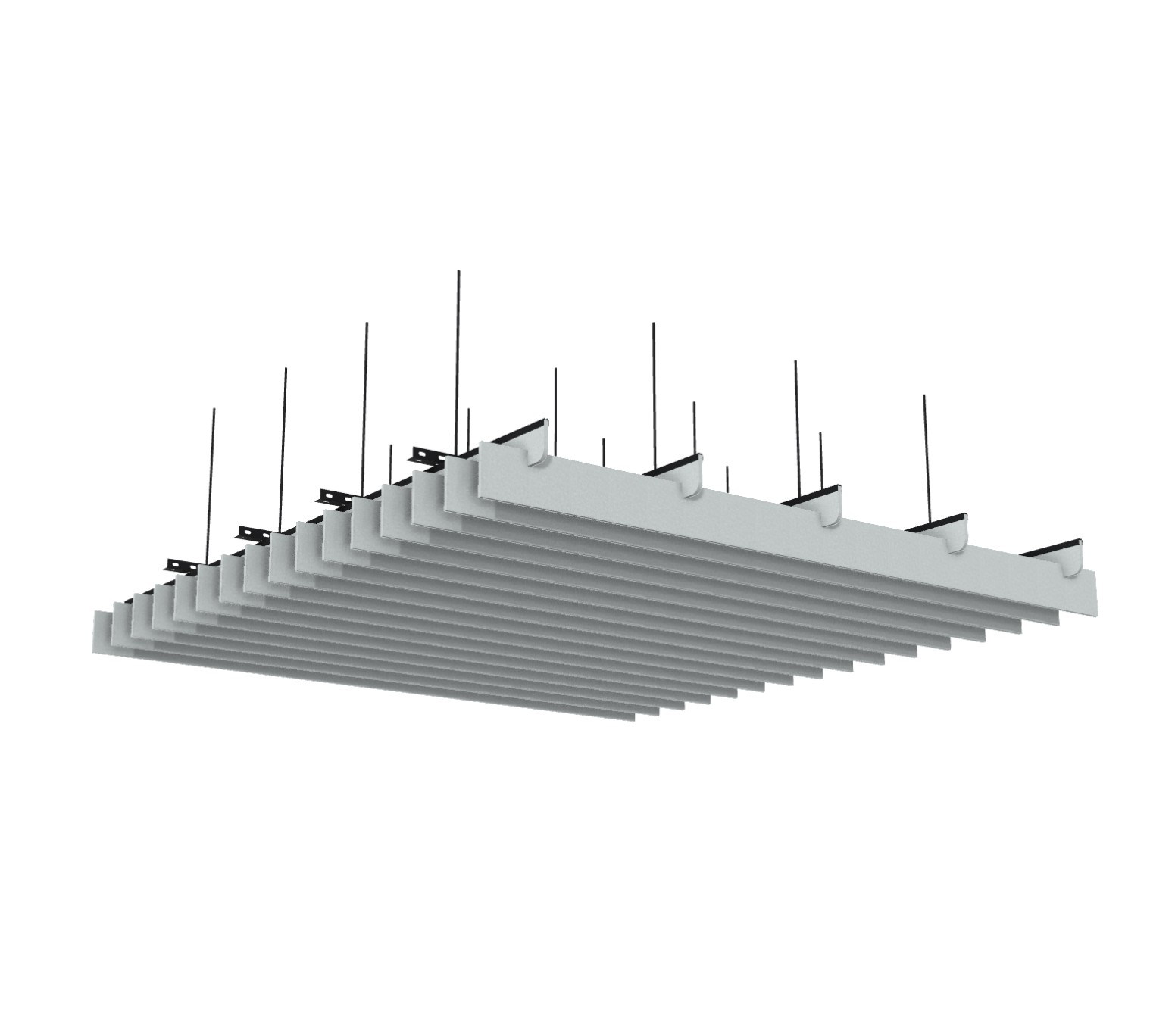
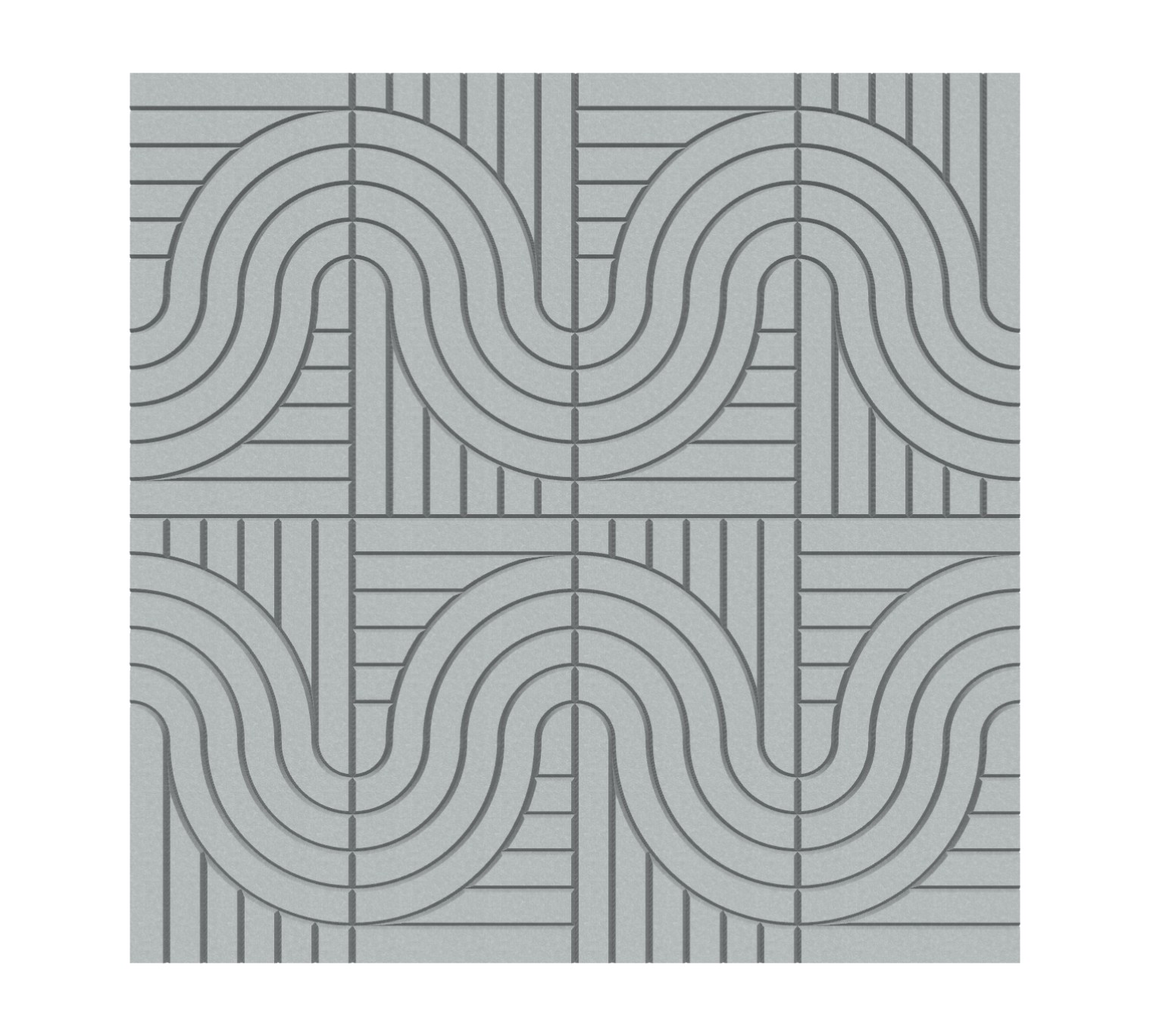
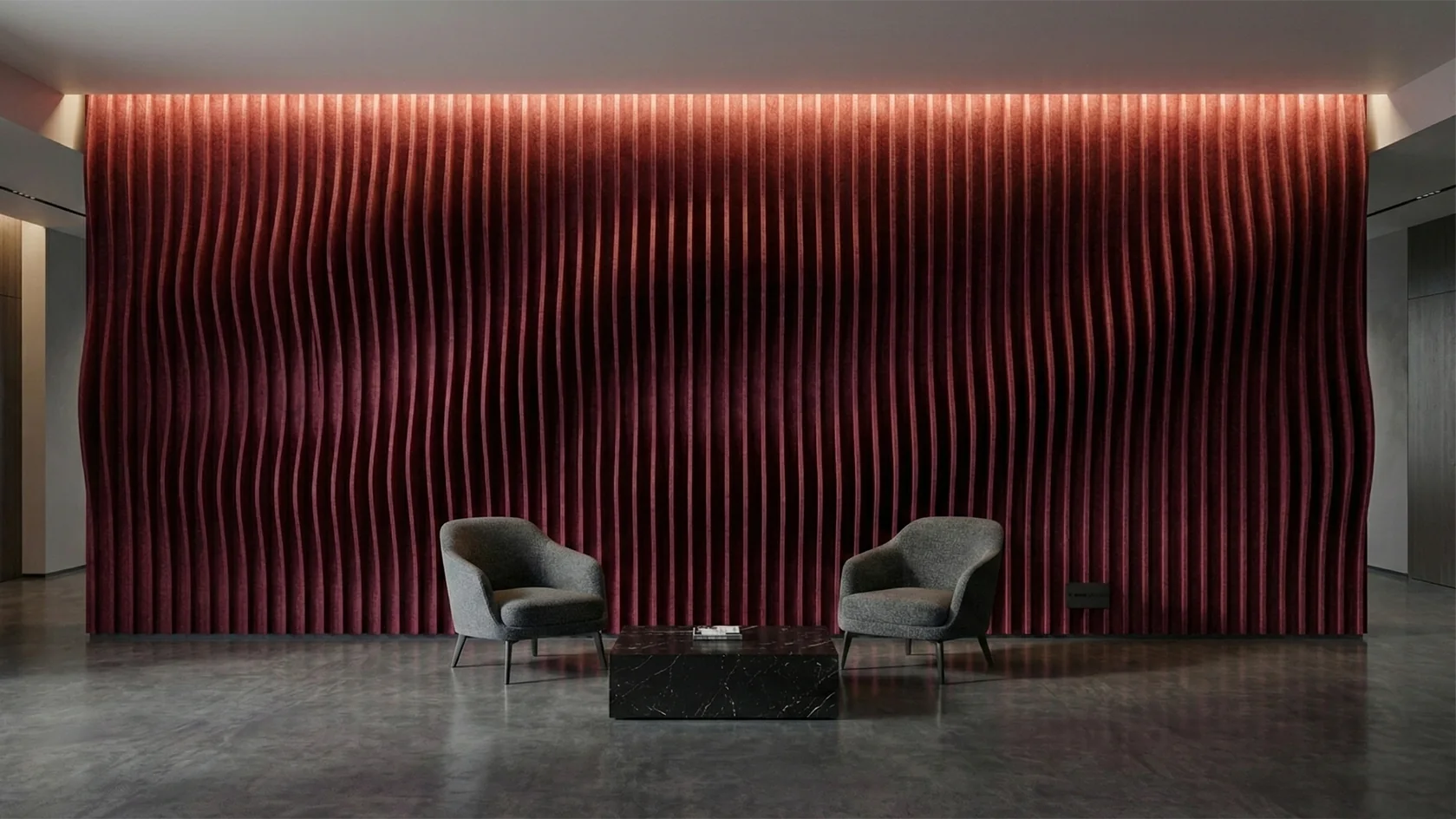
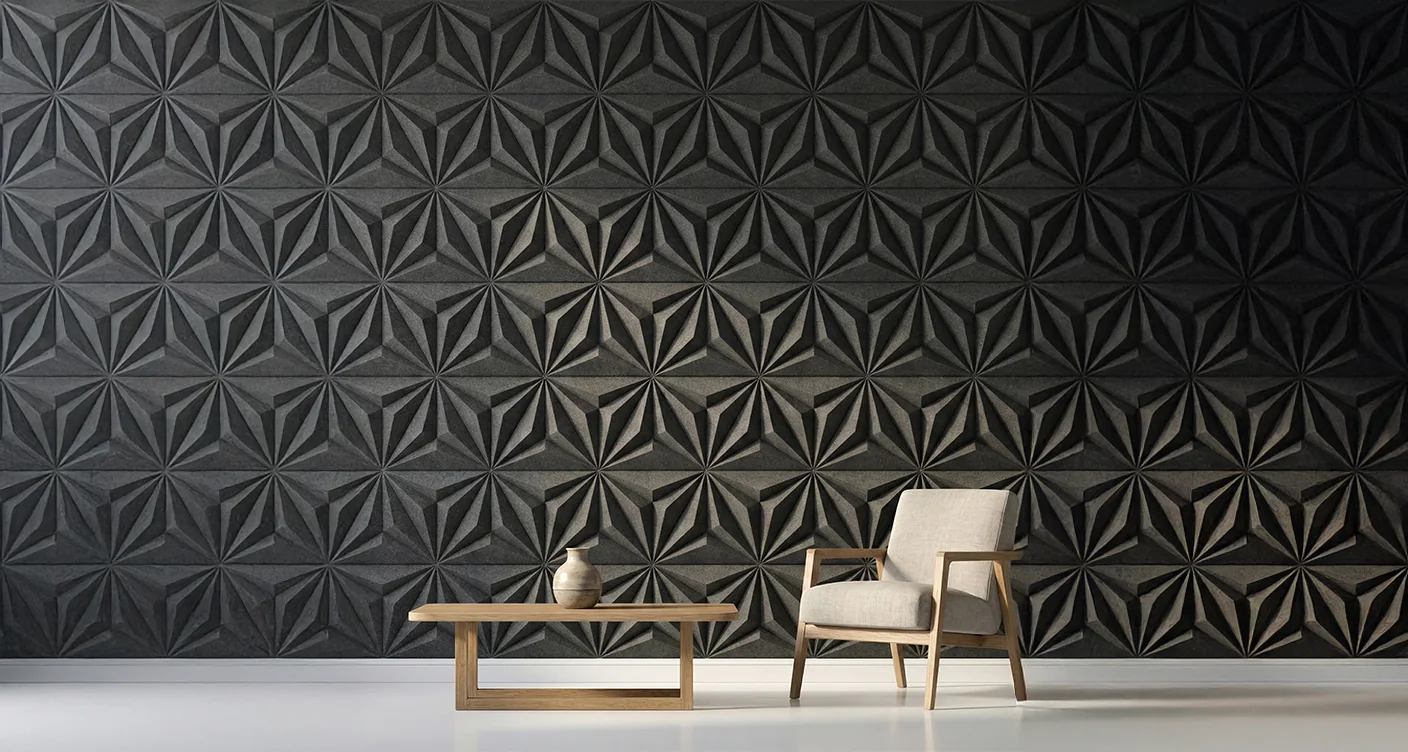
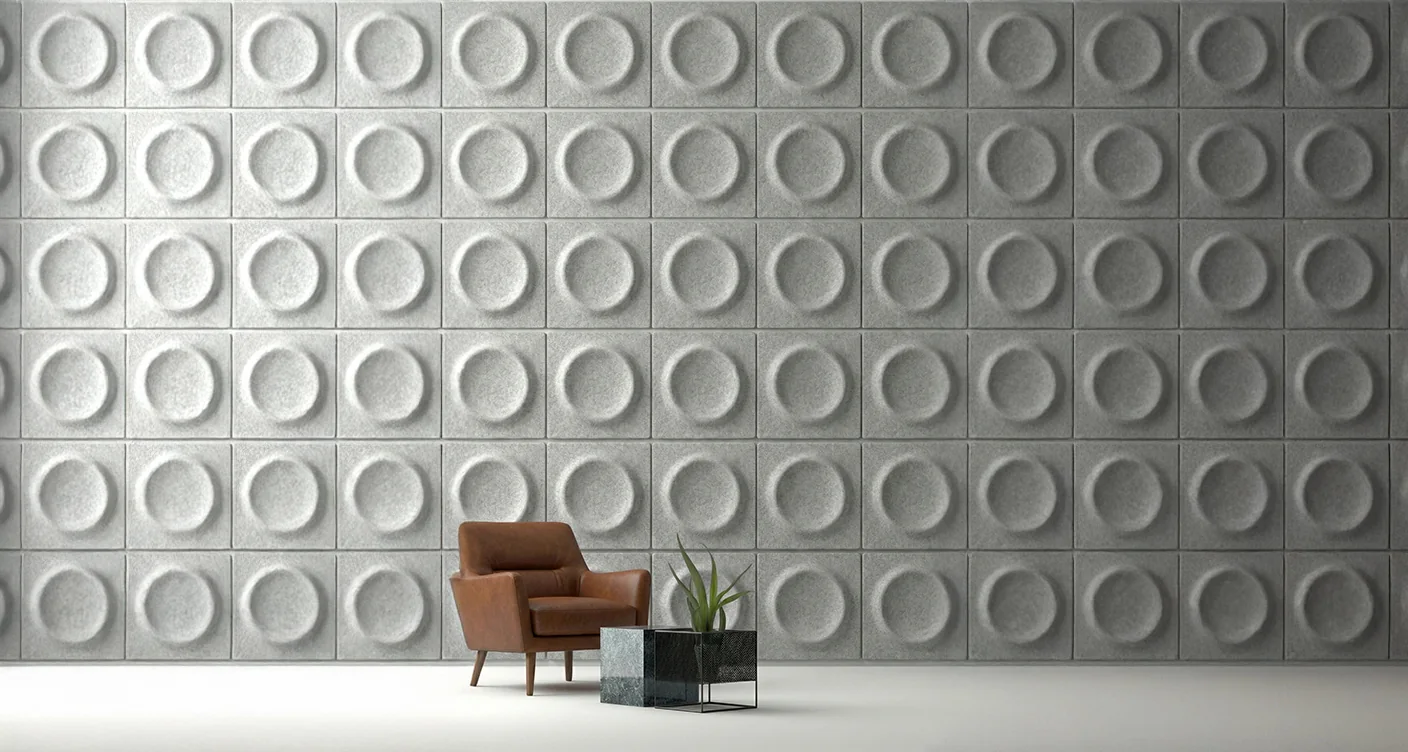
Plain, V-Cut or printed PET felt panels can be used on the wall surface. If ceiling intervention is required, lightweight canopy systems can be considered. Thickness and mounting clearance are selected according to target frequencies.
Visual Integrity
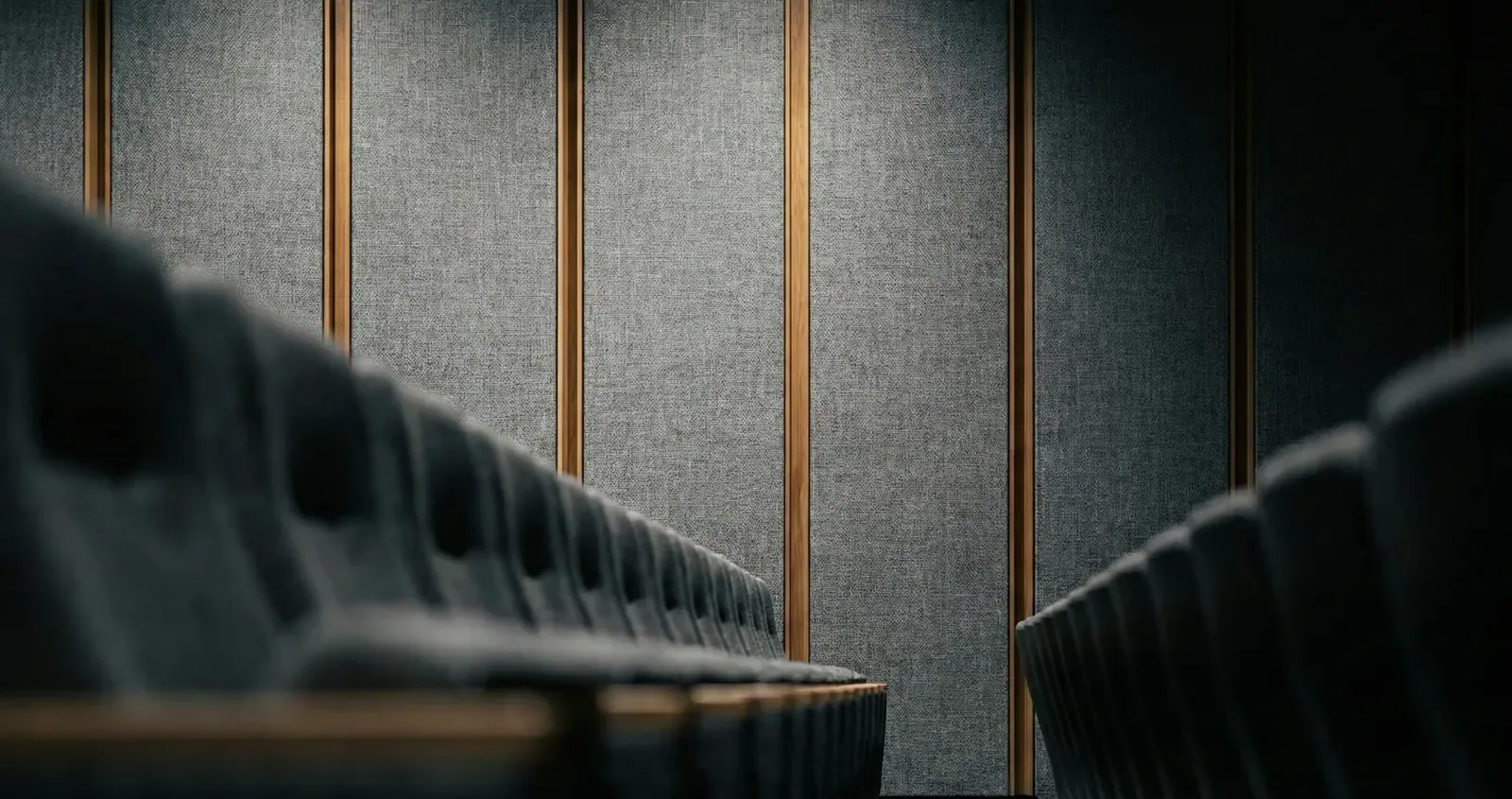
When the colour and module layout is designed according to the architecture of the work area, the acoustic surface does not look like an added equipment; It becomes a permanent part of the room.
Working Pattern for Video Call
First improve the distance and orientation of the microphone from the source. When the microphone is close to the mouth, the relative impact of room reflections on the recording may be reduced; It is not necessary to cover the entire wall for this. Instead of placing the table in the middle of two hard walls, try different places. The camera frame and the reflection point heard by the microphone do not have to be the same.
When determining the panel location, consider the hard wall opposite the speaker and microphone, the side walls and the ceiling above the table separately. Rugs, curtains and bookshelves change the feel of the room; However, it does not replace the band values in the product's test report.
Record Problem Correctly
In-room tinnitus
In a short speech recording, pay attention to the prolongation at the end of words and bare wall reflections. Hand clapping is just a rough clue, not a numerical measurement.
Outsourcing
Examine window, door, and building connections for traffic or neighbor noise. Consider PET felt wall paneling to control reflections within the room.
Comparison
Record before and after with the same microphone, distance and speaking level. If the automatic noise suppression setting changes, you can't attribute all the difference to the panel.
How Do You Choose Product Area in a Small Room?
To start, draw the table, window and bare walls into a simple sketch. Compare the conversation recording at different table orientations; Identify surfaces from which sound returns sharply. Covering only the part of the wall visible to the camera provides visual integrity, but the strongest reflection heard by the microphone may be on another side.
Listen to the difference with the same recording method after the first placement, instead of adding more panels one after the other. Consider the ceiling or opposite wall as a second step if necessary. Even in a very small room, utilize product space without ignoring existing surfaces such as heavy curtains, upholstered furniture and open shelving.
The Way to Follow If You Hear a Neighbor's Voice
Noise entering from outside is addressed through the sound insulation of doors, windows, partitions and junctions. PET felt panels are used to reduce sound reflections within the room.
Constant sound sources such as ventilation or computer fans at home may dominate the conversation. Changing the microphone position and mechanical source is sometimes a more effective first step than wall covering. The acoustic product decision is made after understanding the source and in-room reflection separately.