How Should Recycled Content Be Expressed?
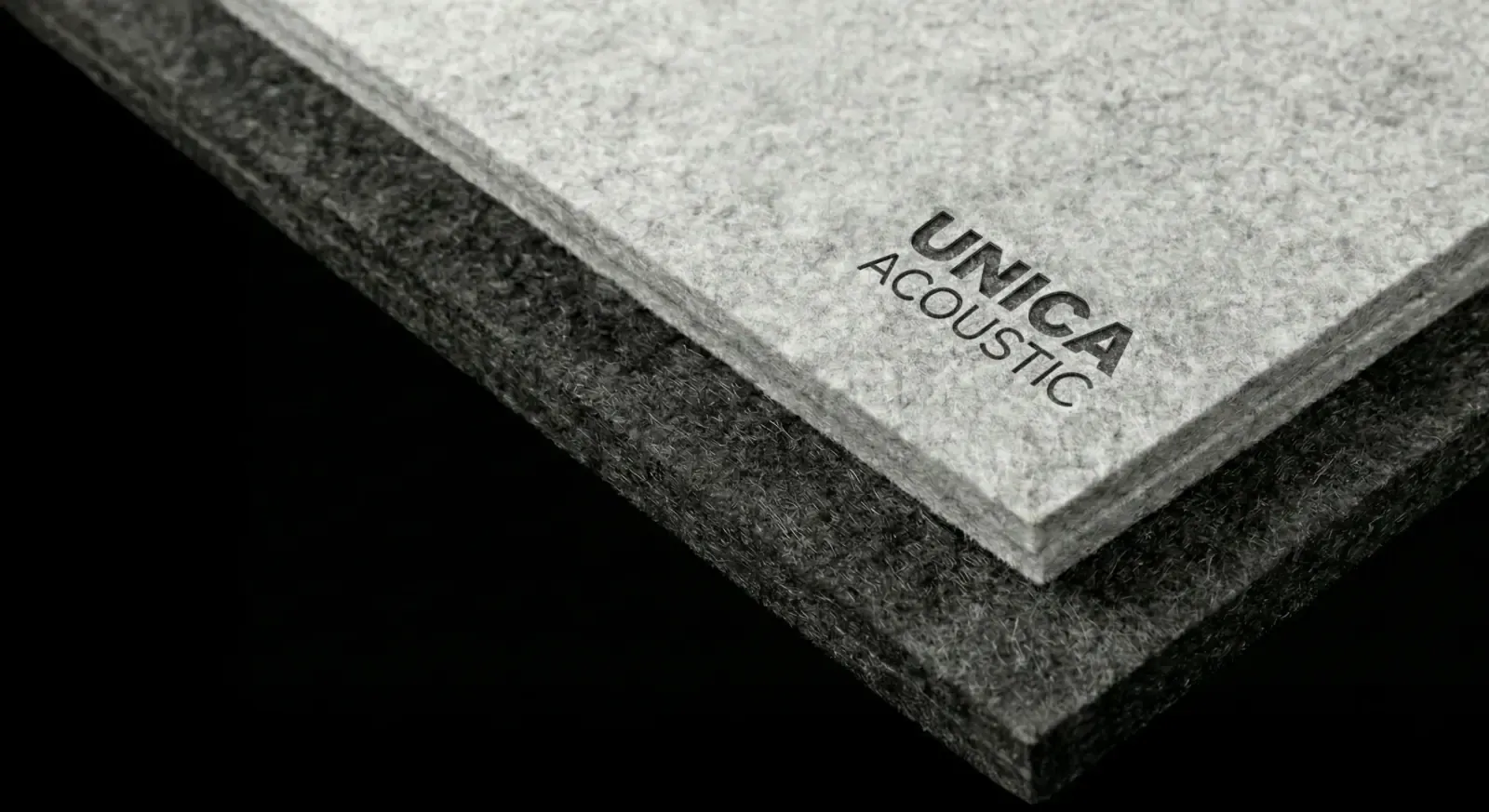
The PET felt we use is 100% polyester and contains 60% recycled content.
Acoustic Performance Depends on Condition
Thickness, mass per unit area and mounting details determine PET felt sound absorption. Our 24 mm option achieves NRC 0.90; mounting options are listed on the Technical Data page.
Fire and Chemical Claims
The tested 9 mm specimen is classified B-s1,d0 under EN 13501-1 and Class A under ASTM E84. Reports are shared with the project documentation.
Design Value
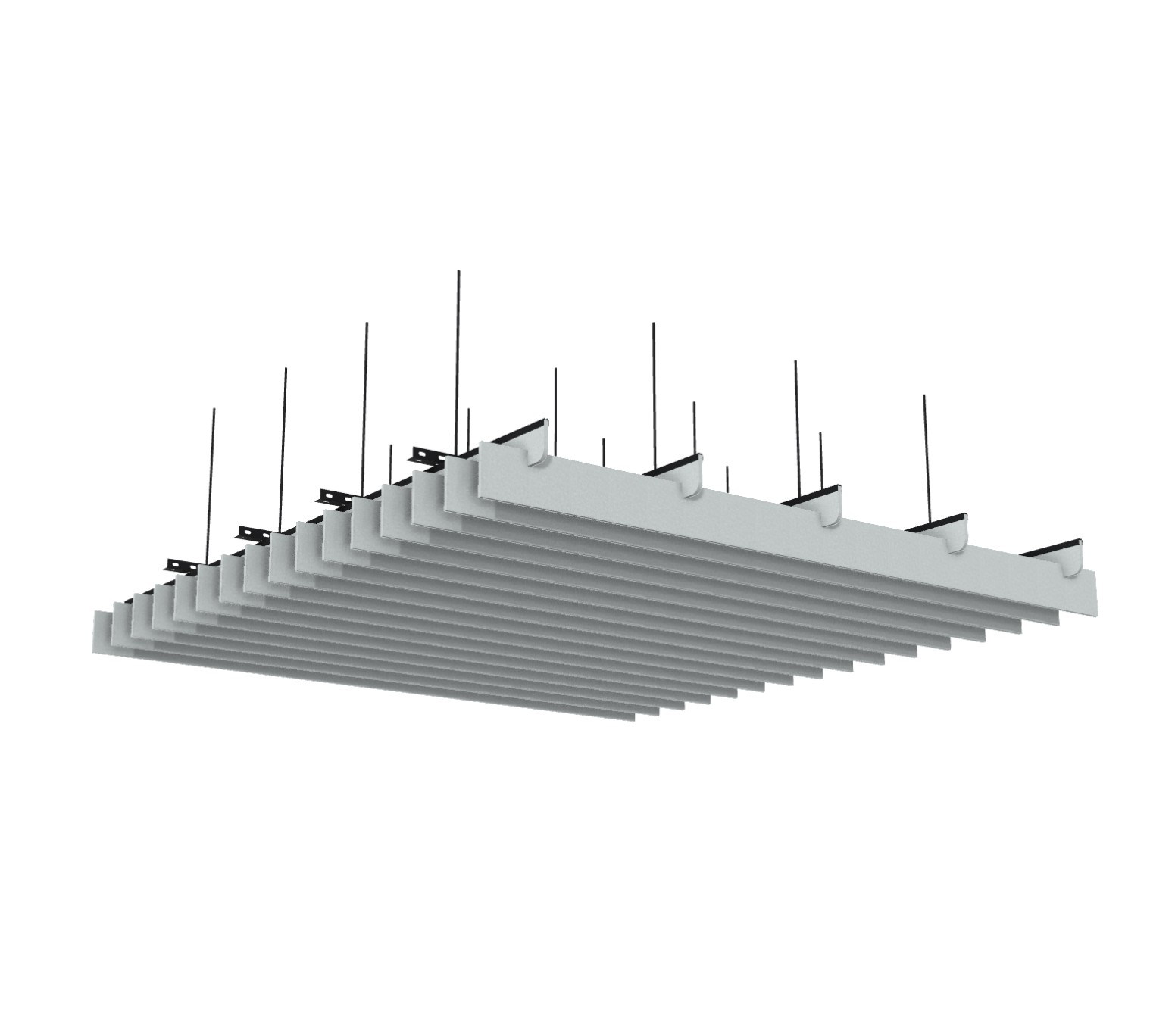
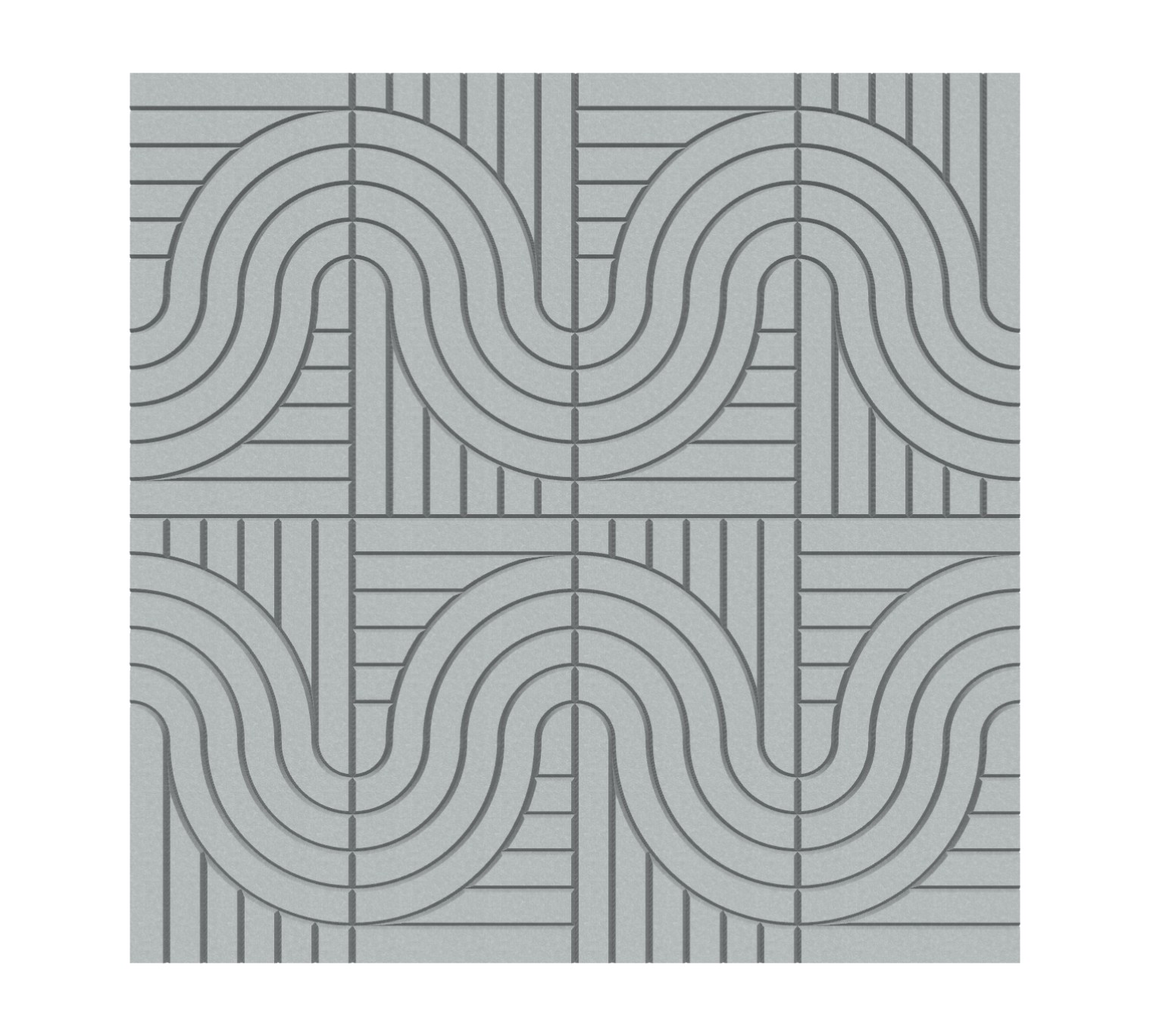
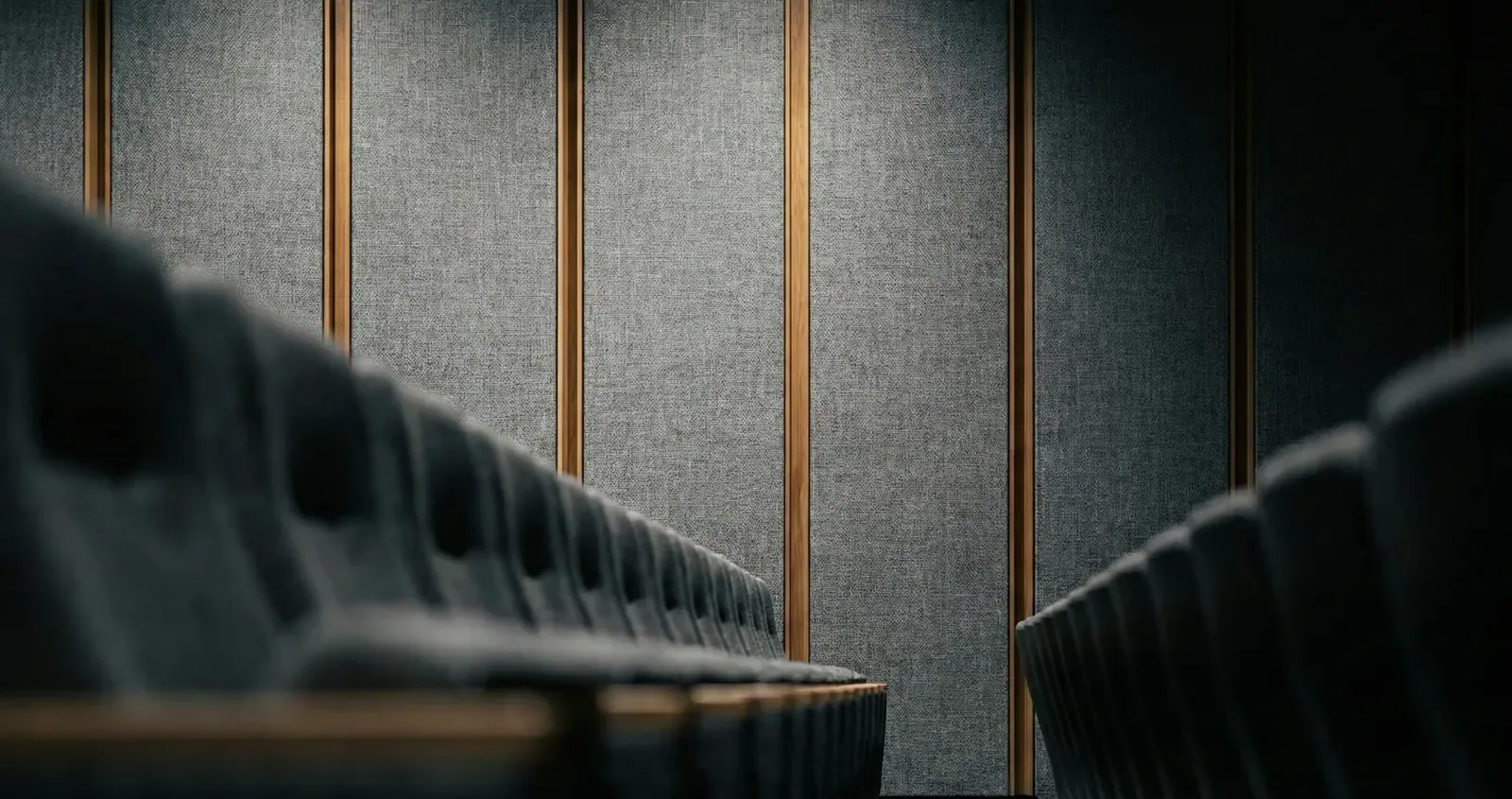
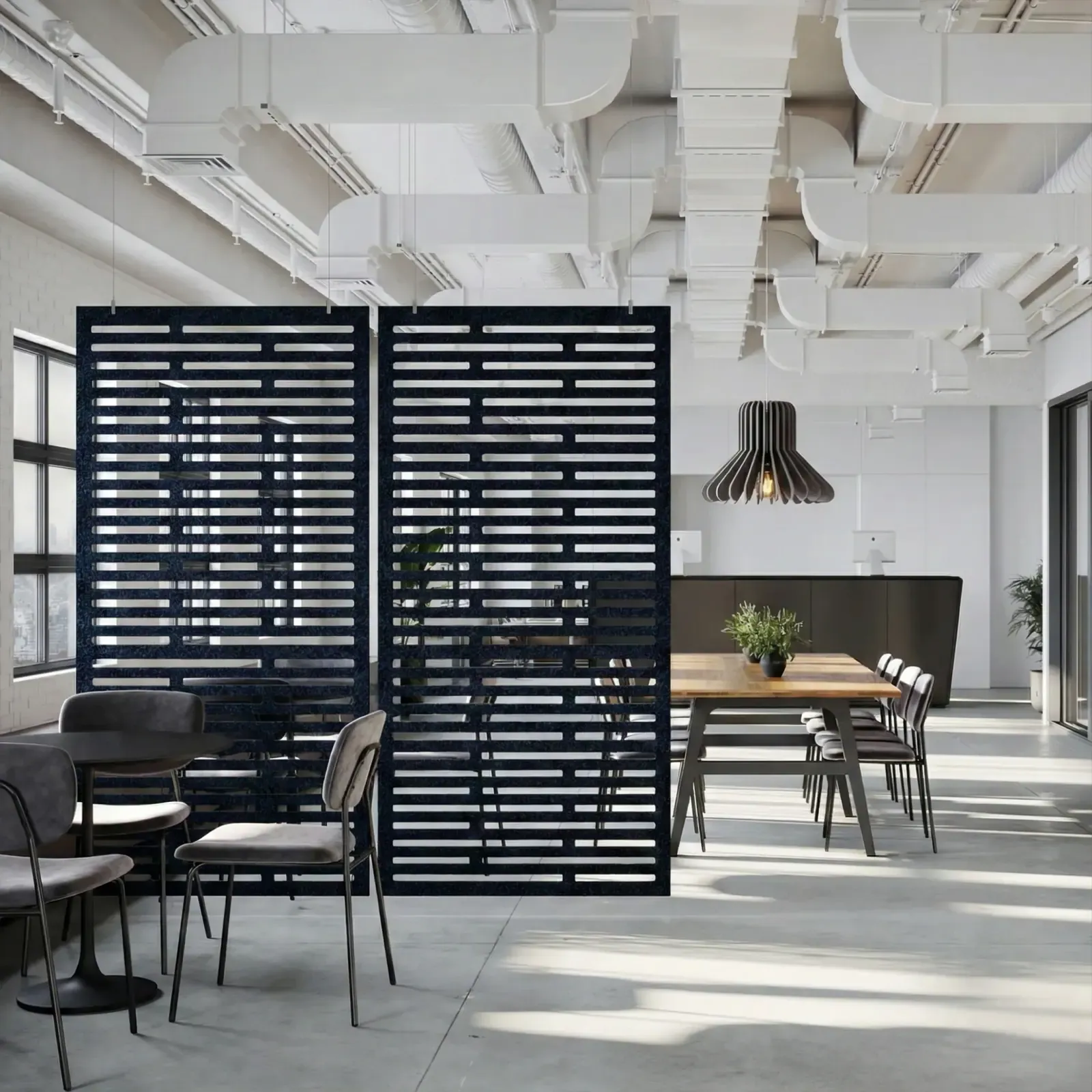
The fact that it can be cut, folded and produced in different colours turns PET felt into a flexible architectural material for walls, ceilings and partition systems.
Which Part Does the Material Declaration Cover?
Recycled content may refer to the material, the finished panel or the complete suspended system. These are different scopes. Adding facings, adhesive, suspension and packaging changes the product system. The PET felt used by Unica Acoustic is 100% polyester and contains 60% recycled content; this percentage refers to the felt material itself.
Supply chain certifications address monitoring of claimed content; This alone does not prove that the product has a lower environmental impact. An EPD reports environmental data within the defined life cycle. The recycled content certificate and the environmental product declaration show different information. Compare the document type requested in the project with the current documentation for the selected product.
Acoustics and Maintenance are Selected Together
Technical data
Match the thickness, mass per unit area and air gap of the selected sample with the frequency curve in the report.
Application
Verify cuttability, edge finish and module repeat with actual production drawing.
Service Life
Define cleaning routines, impact risks and reuse requirements during design. Removable connections provide access for maintenance and relocation.
How is PET Felt Transformed into an Architectural Product?
PET felt is a non-woven material produced from polyester fibres. Fibre structure, density, thickness and surface treatment affect the texture and processability of the product. Subsequent cutting, folding or molding of the sheet provides design possibilities; However, the acoustic result of different forms made from the same raw material cannot be considered the same.
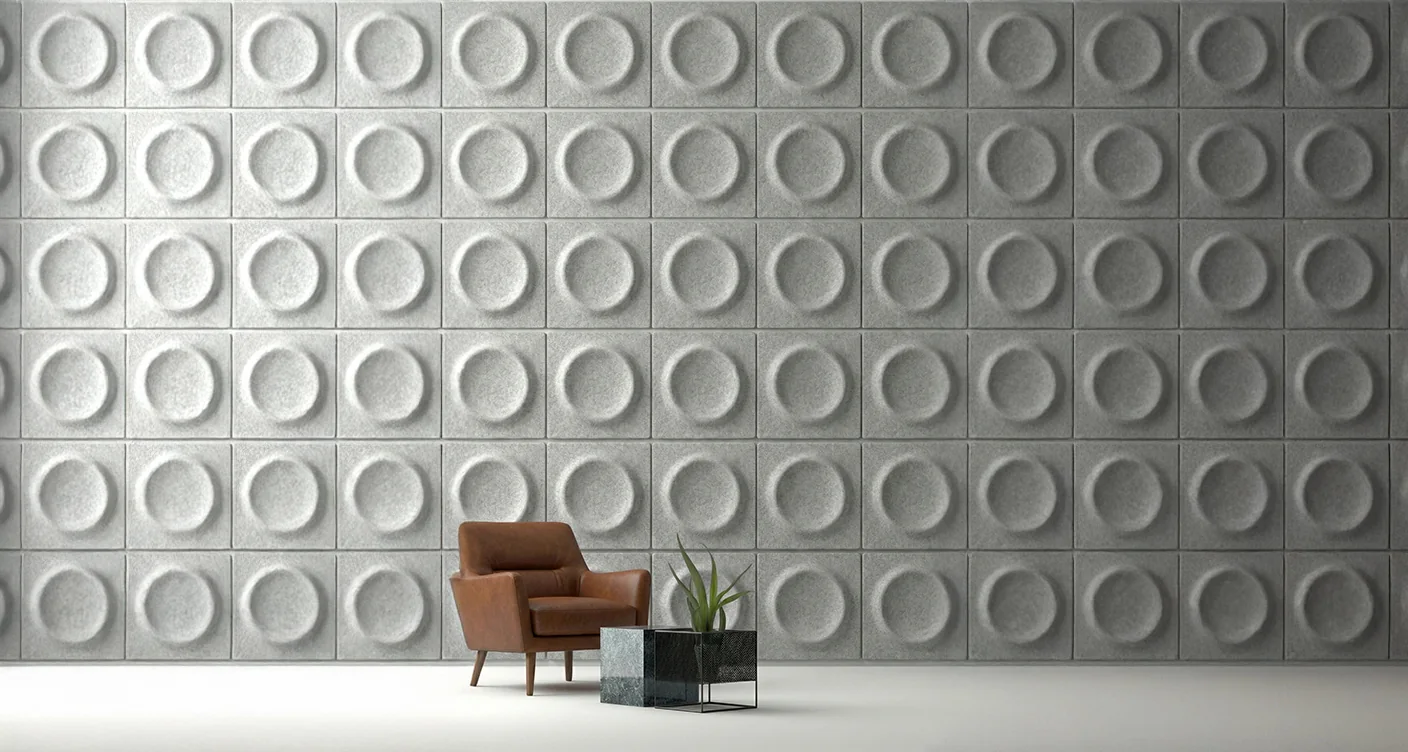
A flat panel, V-Cut surface and molded three-dimensional module look architecturally different. Application conditions may also differ: the presence of space behind the panel, open edges or free-hanging use changes the sound-interacting surface. Therefore, actual assembly details as well as the product family are sought in the technical document.
How to Compare Environmental Information?
For a recycled content claim, first read which product the percentage belongs to, the source of the recycled material, and the date of the document supporting the claim. Supplier declaration, third-party chain tracking document and environmental product declaration are different types of evidence. The existence of one does not automatically ensure the others.
Service life, maintenance requirements and demountable mounting details are considered together when selecting products. Material composition and technical documents complete the product information in the project package.